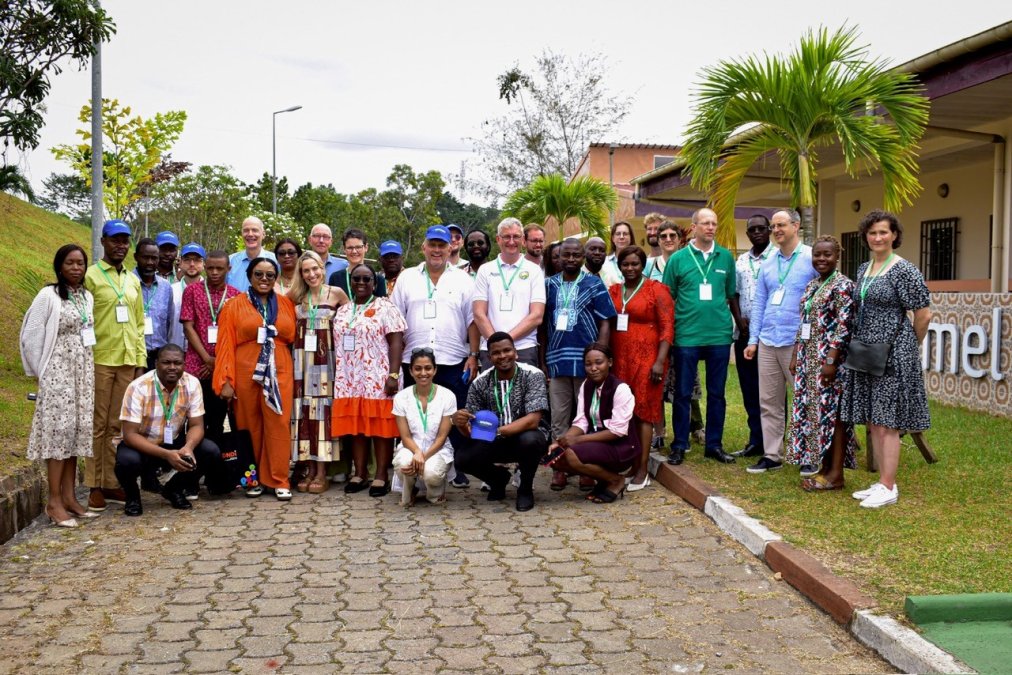
Third eWHORM Progress Meeting Held at CERMEL in Lambaréné, Gabon
The eWHORM consortium held its third annual progress meeting in Lambaréné, Gabon, from 29 June to 3 July 2026. The five-day meeting was hosted by eWHORM partner and sponsor CERMEL, bringing together representatives from partner institutions in Germany, the Netherlands, Switzerland, Cameroon, the Democratic Republic of the Congo (DRC) and Gabon. The meeting provided a valuable opportunity to strengthen collaboration across the consortium and gain first-hand insights into the research and clinical trial activities taking place in Gabon.
The meeting featured productive discussions on the challenges encountered at the different sponsor sites, the adoption of the master protocol and clinical trial design, and strategies for maximising the impact and uptake of key project results, including the LAMP assay and the virtual assessment tool. Two workshops focusing on clinical trials (1 July 2026) and clinical data management (24–26 June 2026) were also organised, providing further opportunities for knowledge exchange and capacity building.
A particular highlight of the visit was the opportunity to explore the historic hospital established by Dr Albert Schweitzer, where CERMEL originated as a medical research unit dedicated to investigating diseases of importance to the local population. Consortium members also visited a second clinical trial site near Lambaréné, where eWHORM clinical trials are being conducted. These visits offered valuable insights into the local healthcare and research context.
Looking ahead, the consortium will focus on three key priorities:
- Clinical trial progress: Conducting the interim analysis of results from the first stage of the clinical trials, which will inform decisions regarding the implementation of the second stage.
- Exploitation of project results: Advancing the exploitation pathways for prioritised key results to maximise their impact and potential for wider application.
- Capacity building: Planning and implementing further workshops to strengthen expertise and collaboration across the consortium and the wider eWHORM project.
Partners left Lambaréné encouraged by the progress achieved and motivated to advance the next stages of the project, with sincere appreciation to CERMEL and colleagues in Gabon for their warm hospitality and for making the visit such a memorable experience.